A covered call is an options strategy pairing a long stock and a short call. It is part of the concentrated wealth playbook.
A covered call allows investors to extract a little cash out of a concentrated position without immediate tax drag. Some say that the short call enforces selling discipline while paying a little income.
In my mind, this doesn't address the elephant in the room, which is the risk in the concentrated position itself, but I'll get to that in another post in the near future.
This post is about how the covered call's structure (namely the call's tenor and strike, among other things) drives the ongoing and eventual tax implications.
This is a nuanced topic, so I built a little calculator to learn how it works.
Here is what the calculator looks like.
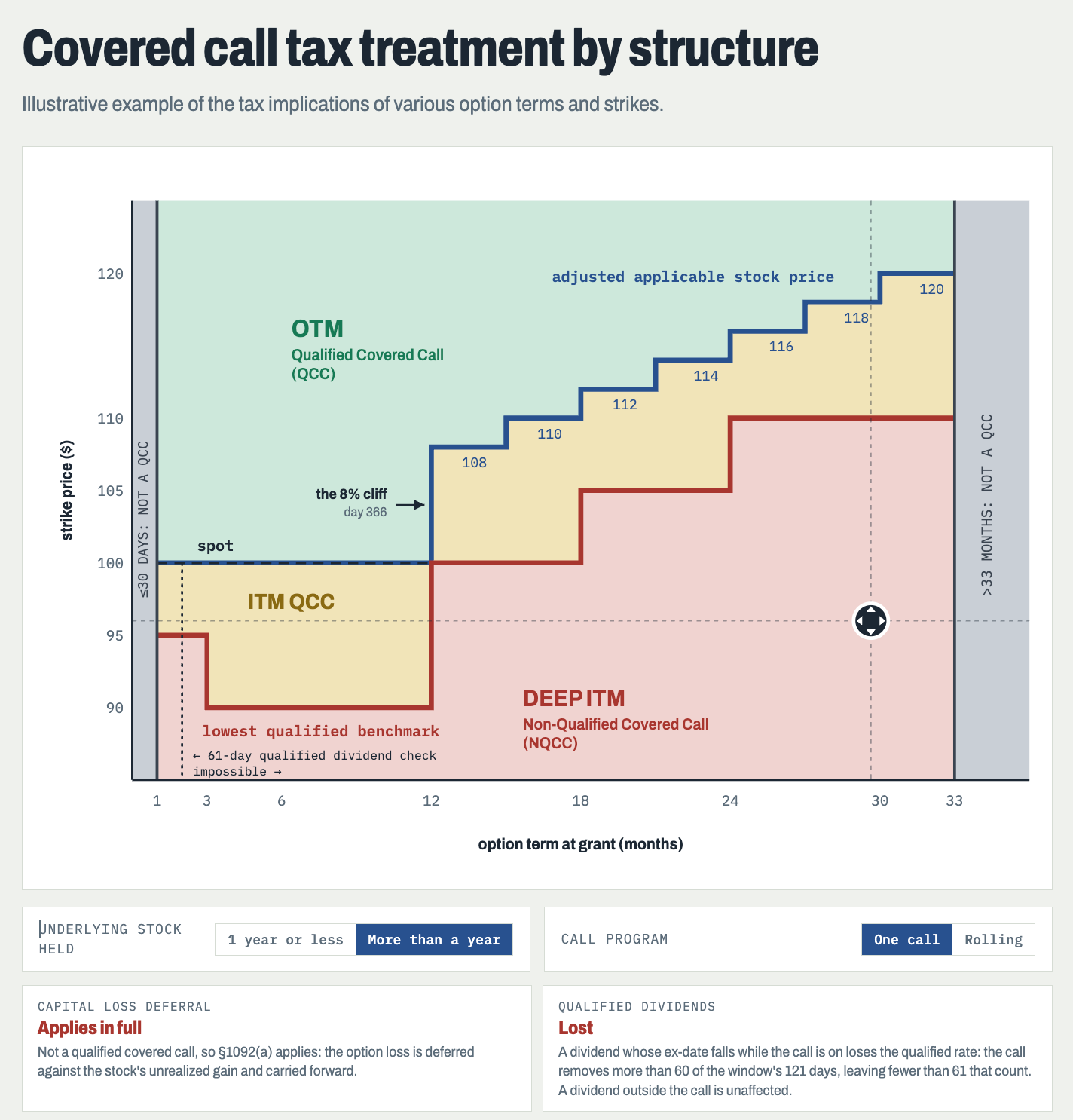
It considers the call's strike price for various option terms at grant, and shows how these structuring decisions impact four items:
- Whether a capital loss is deferred
- Whether dividends stay qualified
- How a loss on the call is taxed
- Whether the stock's holding period changes
Subscribers can try the calculator below.