


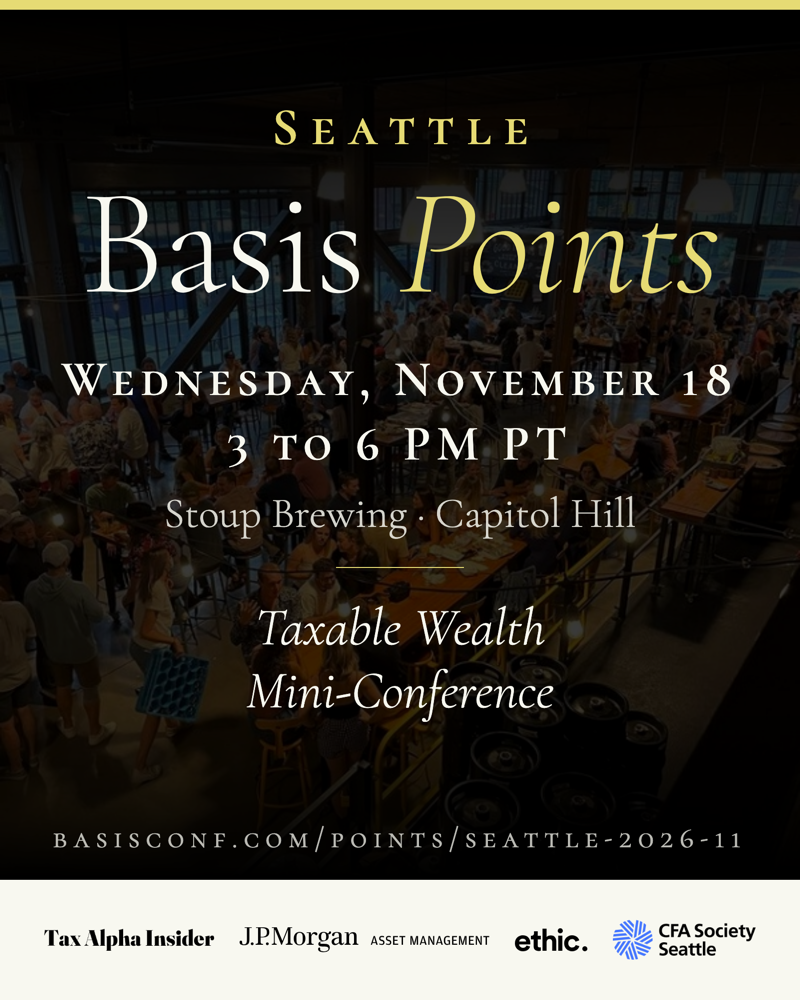
Seattle investors/advisers Brewery mini-conference on Nov 18 👇👇👇
I'm pleased to welcome back Elie Rozner for this article on taxing autocallable contracts. Elie and I co-authored "Managing Concentrated Public Stock Positions by Seeding an Exchange-Traded Fund," where we predicted many of the points the Treasury later raised in Notice 2026-62 and Rev. Rul. 2026-20.
This is educational content, not investment, tax, or legal advice. All investing has risks. Hire an adviser or tax counsel for matters specific to your circumstances.
You've probably heard of autocallables as a new and fast-growing category in income ETFs. As of late October, approximately $6 billion was allocated to them, a roughly 10x increase since the beginning of 2026.
Autocallables are built for income, and often have double-digit stated coupons.
They are extremely complex.
And while many have written about their mechanics, as far as we can tell, little has been written about how they're taxed.
To unpack what's going on and the work that the ETF wrapper is doing, we begin by examining an isolated autocallable note.
Single autocallable notes are pretty weird, both economically and for tax purposes. As we'll see, in certain cases, investors can lose money on a note and still generate a net tax liability.