


I have written about managed futures a few times recently (including Managed futures are weirdly uncorrelated, Futures taxation, the Cayman blocker... and who cares?, and Futures in RICs are kind of a bummer... for now).
To newcomers, managed futures seems like a weird, niche strategy, but I keep stumbling on tables like this one from Morningstar (2011) showing that managed futures are a correlation hidden gem, and I can't look away.
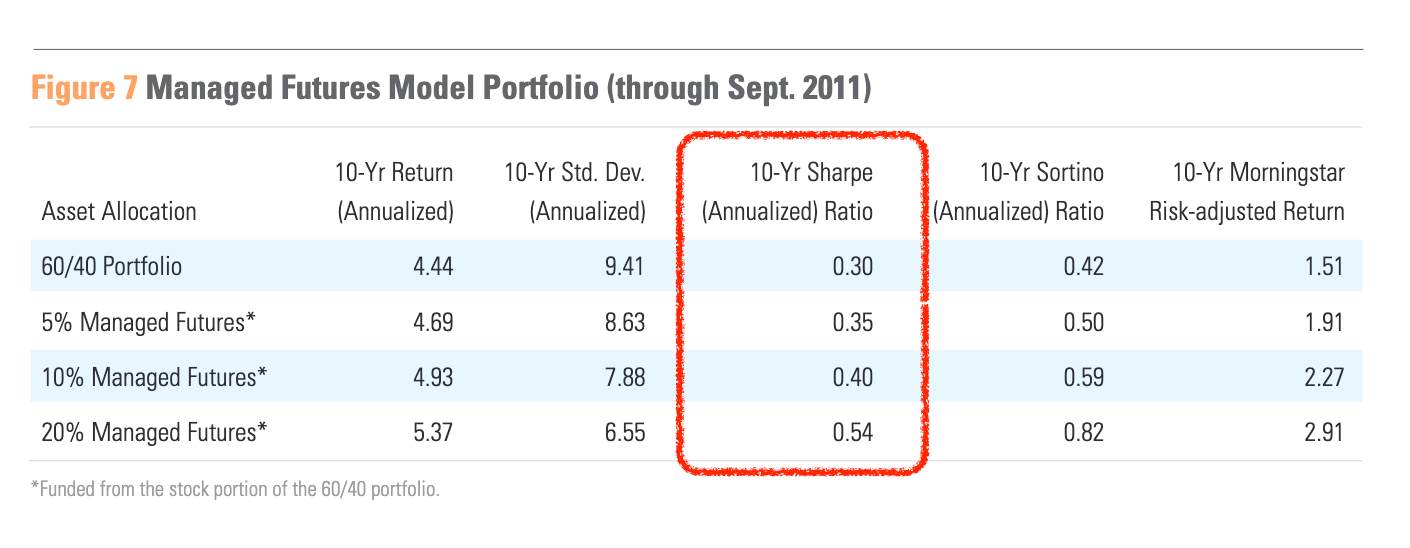
Is this a durable result? If so, what's the intuition? Why hasn't it caught on (shouldn't this be a $1+ trillion strategy like its stock/bond companions)? And could it be tax-efficient?
AlphaSimplex (2024) shows ~$350 billion in managed futures assets, most of it institutional.
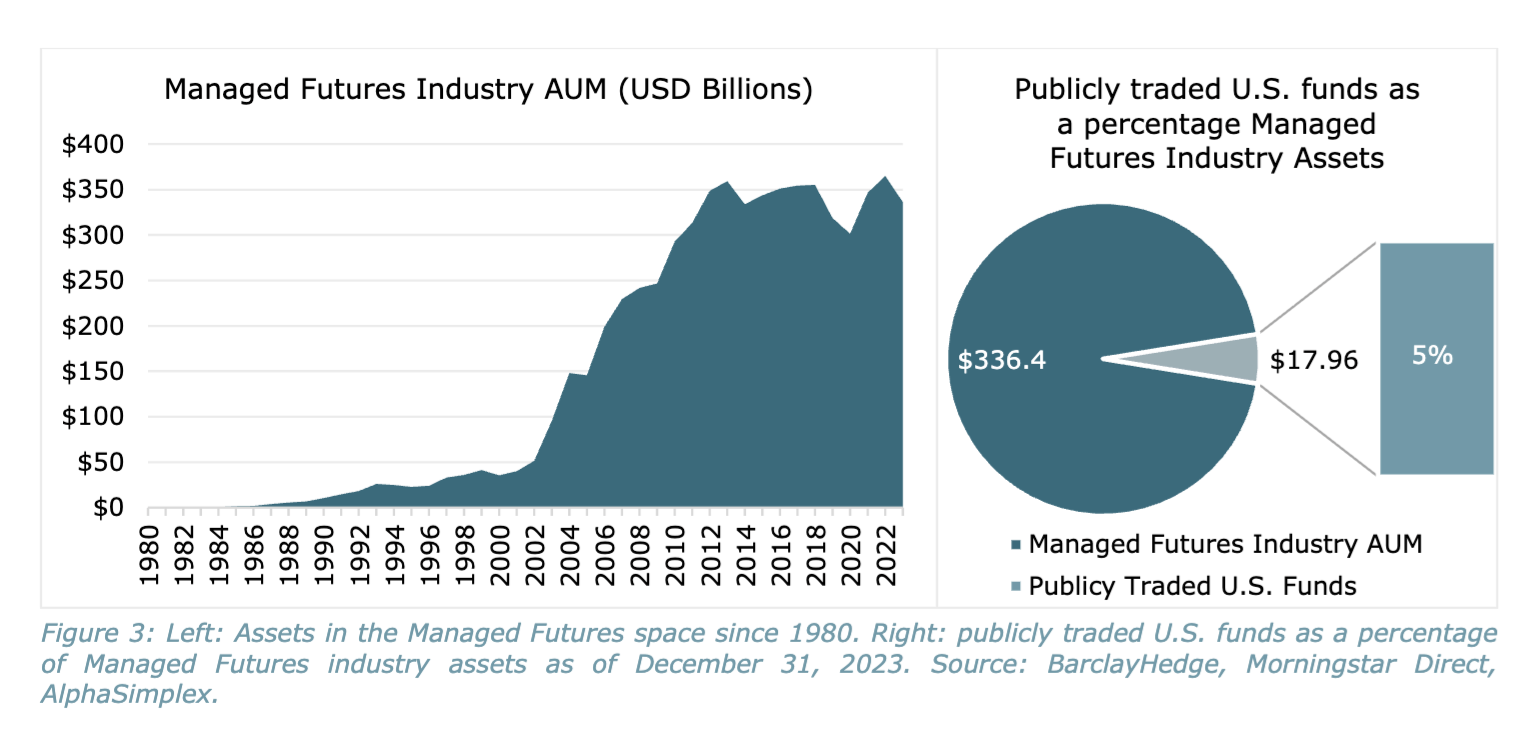
Here's a bit more granularity...
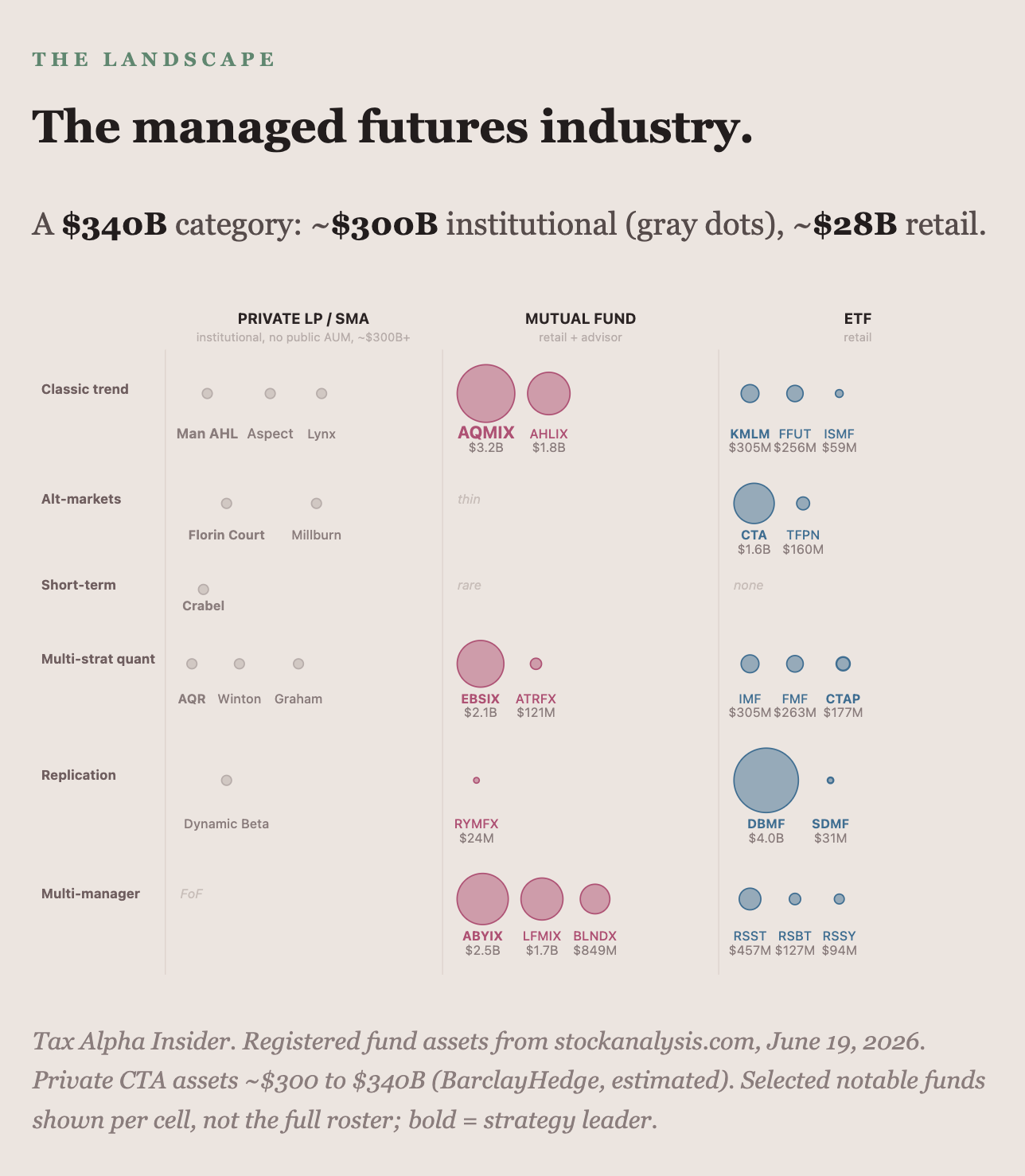
Managed futures doesn't have the intuition of equity beta or bond duration, and many people simply haven't heard of it.
That said, Morningstar's results seem durable based on some AQR research.
Here's AQR's 2017 A Century of Evidence on Trend-Following Investing (trend being the driving force behind many managed futures strategies) updating Morningstar's figures above and analyzing managed futures performance during crises.
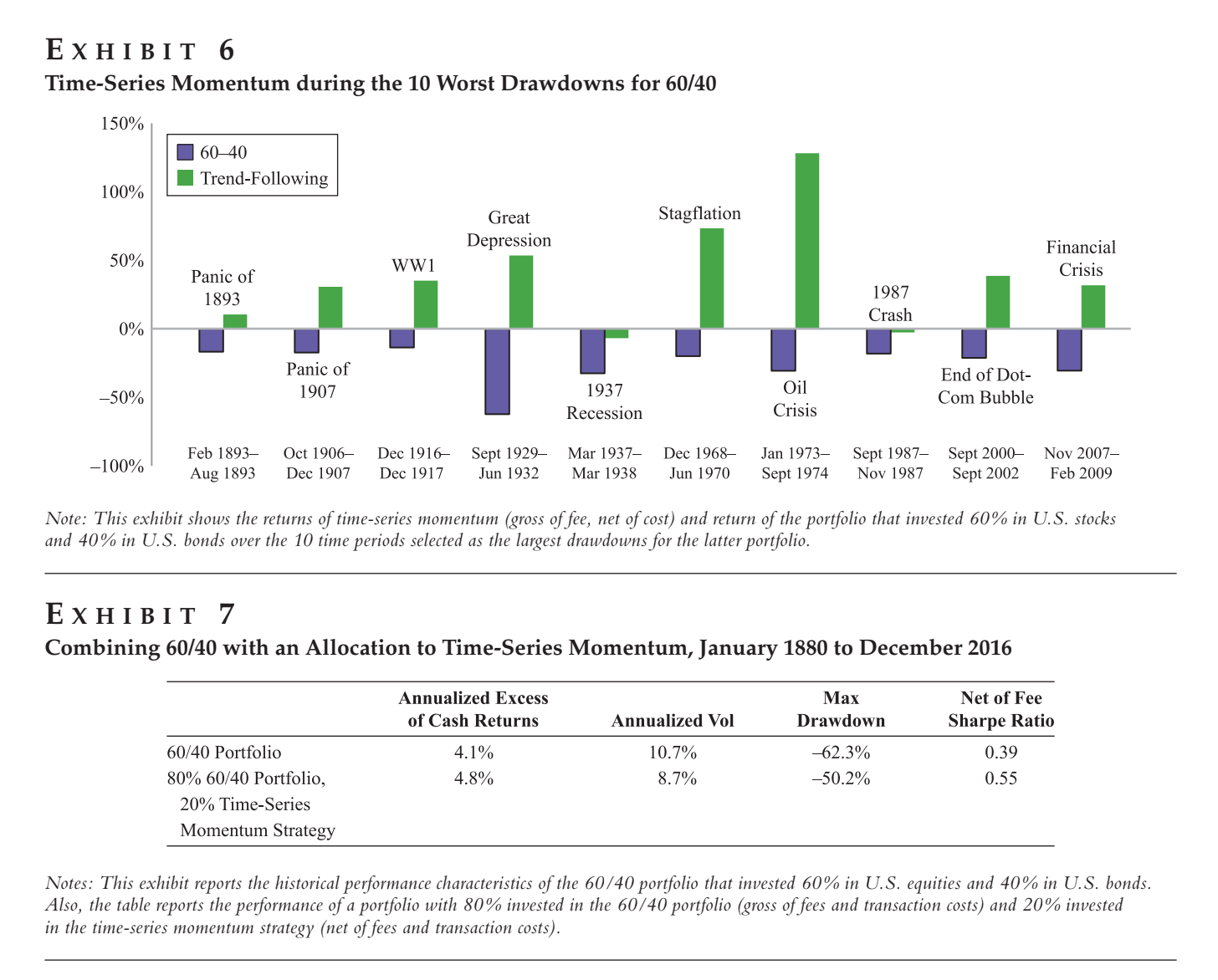
AQR 2023 Key Design Choices When Building a Risk-Mitigating Portfolio shows that trend has protected portfolios during severe downturns and maybe strikes the nice balance of risk-adjusted returns and downside mitigation (unlike, say, put buying).
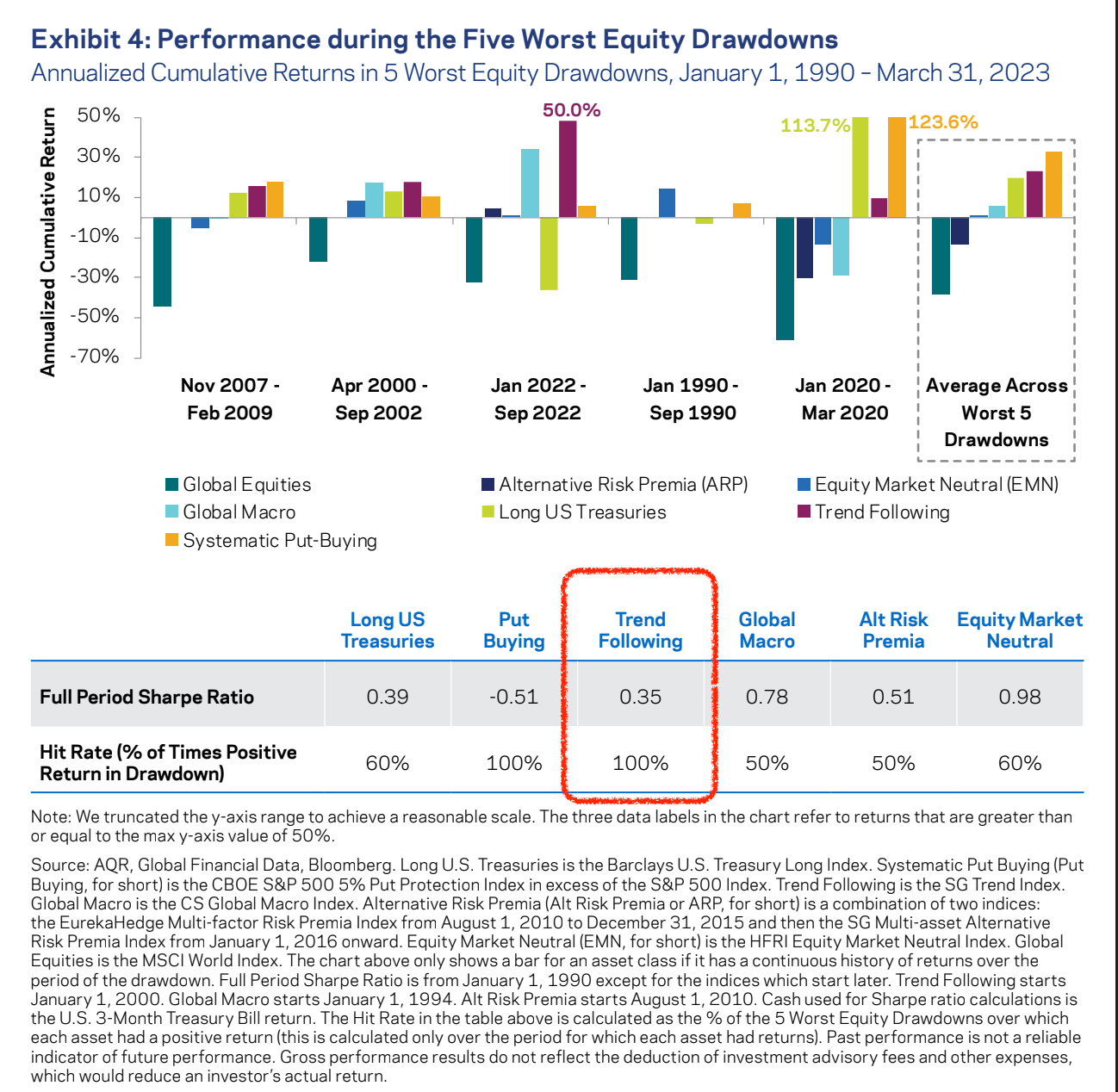
Trend is more than your friend.
If trend following (via managed futures) offers this holy grail of risk-adjusted returns and downside protection, why isn't it a household name like the 60/40 portfolio?
It might be lack of awareness or lack of intuition, but it might also be the price: fees, costs, and taxes.
Here's a quick sample of funds to give you a sense of these things...
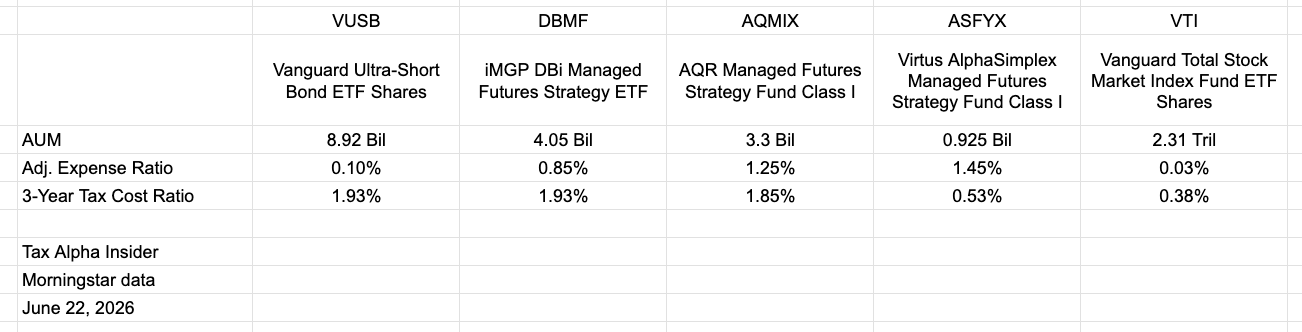
This is interesting to me.
On one hand, managed futures strategies are priced well above the equity and fixed income funds that investors are already using and the tax costs (in this sample of funds) are around the same as Vanguard's ultra-short bond ETF.
On the other hand, high fees might be a sign of relatively high fund operating expenses, or a norm for the niche... or the value might simply justify the price.
There's some cleverness happening behind the scenes to improve costs and taxes that I'll cover in a future note (a swap is involved and that's a tax can of worms).
So, does the value justify the price? To me, truly uncorrelated returns and portfolio resiliency are hard to find. If a managed futures fund solves those problems after costs, that's very valuable.
This isn't investment, tax or legal advice, nor is it a recommendation to buy or sell any security. Hire a professional for personalized guidance.