


Basis Northwest 2026 is sold out. The waitlist has 40 people on it. We expect to release another 5 or so seats this week and next. The best way to stay up to date on future Basis events is via Tax Alpha Insider.
The tax advantages of a qualified covered call
A covered call is a short call written on some underlying.
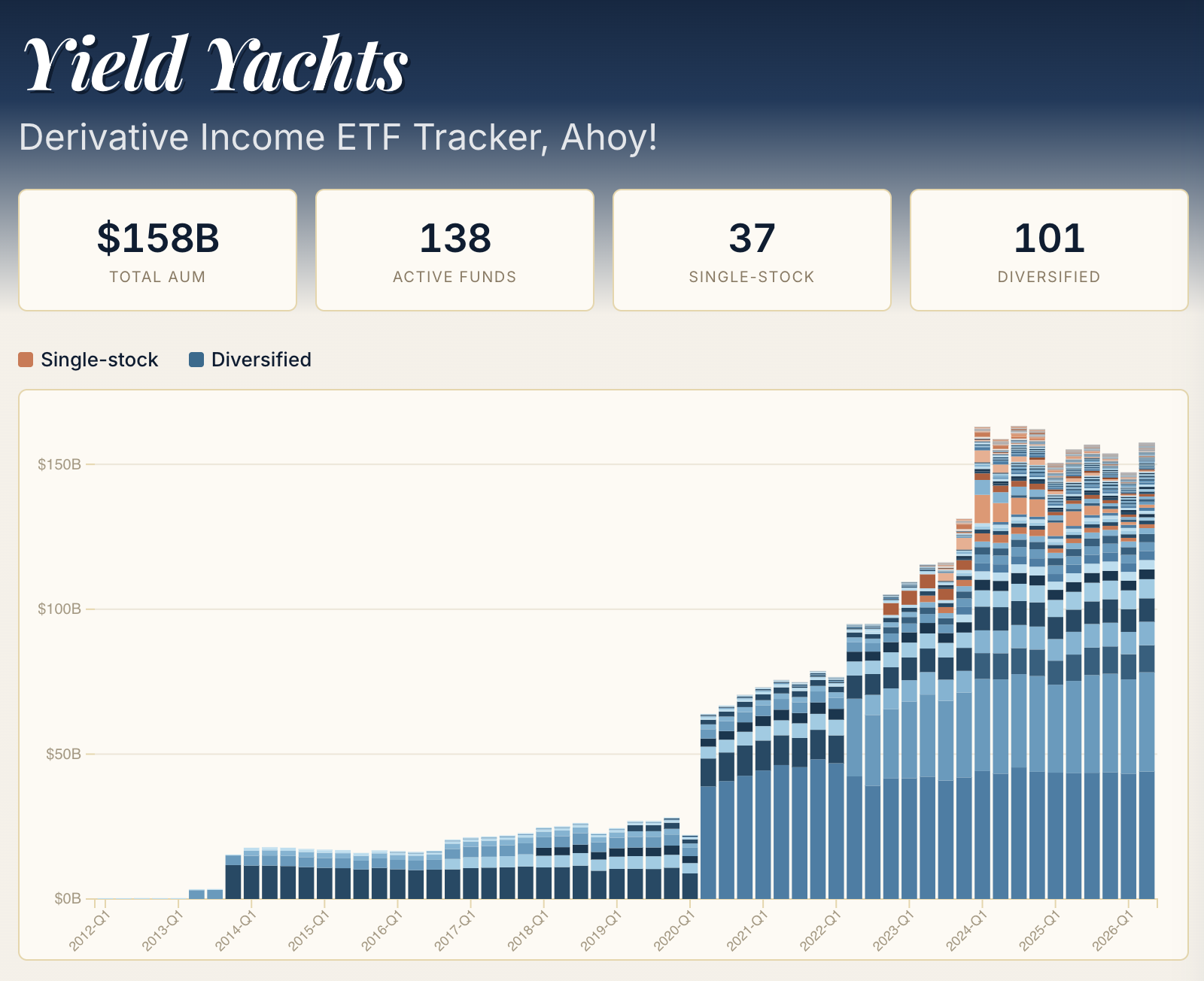
Covered calls have been around forever, but they’re especially popular now because “income” ETFs have exploded in popularity.
Under some conditions, if the call and the underlying hedge are substantially offsetting, the dreaded straddle rules kick in.
Speaking loosely, the straddle rules force losses to be deferred, usually exactly the opposite of what investors want.
But… there’s a statutory way of avoiding straddle treatment if the covered call is "qualified."
How does that work and are there more tax implications beyond the straddle rules?